

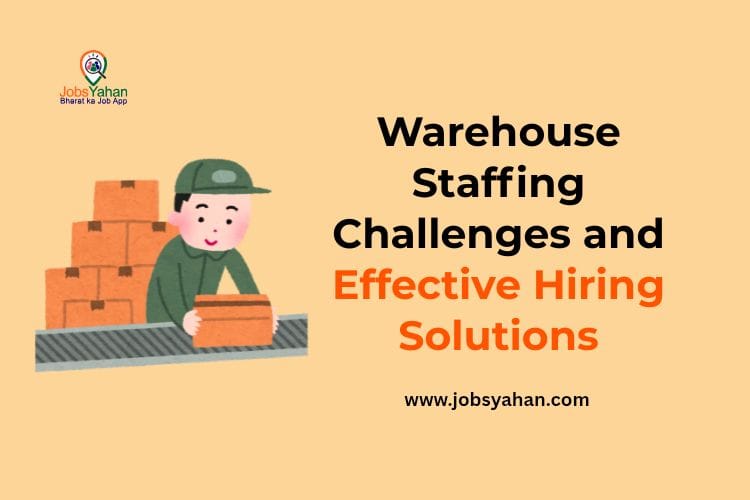
The demand for blue-collar workers in the supply chain domain rises during the peak season, but the local talent pool often remains limited. Warehouses often face pressure to meet production goals while struggling to fill positions quickly. Apart from the rise in technical competencies, distribution centers and warehouses struggle to find professionals who fit their requirements.
These challenges might be caused by seasonal or promotional volume swings, high employee turnover, local competition for warehouse workers, training time for new employees, new facility startups or expansions, inconsistent productivity, limited frontline supervision, and rapid changes in inbound volume. Here are some of the major problems faced by logistics companies and their solutions:
Workforce Volatility and Labor Efficiency
The Challenge
Warehouse labor isn’t only about headcount. What matters the most is workforce flexibility, multi-skill capability, and retention in an ultra-competitive labor market. Automation alone cannot solve the problem. Mismatched labor deployment and skill gaps cause delays in picking, inbound processing, and quality checks.
What is the real challenge?
- Labor shortages not only slow down operations—they directly increase inventory inaccuracy, mispicks, and dock congestion, which, in turn cause delayed orders and customer constraints.
- Training gaps mean seasonal or temporary workers often cause more errors than experienced staff, despite using digital aids.
- Many warehouses depend on legacy shift patterns, which create underutilized hours during low-demand periods and chaotic spikes during peak hours.
The Solution
- Multi-skilled labor department- As a hiring manager, you need to cross-train employees for inbound, picking, and replenishment. Once integrated with WMS alerts, staff can be dynamically reassigned based on bottlenecks, reducing idle time by up to 25%.
- Gamified performance tracking- Modern warehouses use digital dashboards for tracking accuracy, throughput, accuracy, and cross-zone performance, motivating staff and reducing errors without additional supervision.
- Use of predictive labor analytics- Utilize historical throughput and SKU velocity data for modeling optimal staffing per shift and per zone. This goes beyond basic workforce planning. It aligns staffing with real-time operational bottlenecks.
Labor challenges are not solved by ensuring more manpower. They are solved by using tailor-made warehouse worker hiring solutions, workforce orchestration, and selective automation.
JobsYahan Plus is a solution for hiring blue-collar workers. The companies find blue-collar workers with the skills they need and hire them faster.