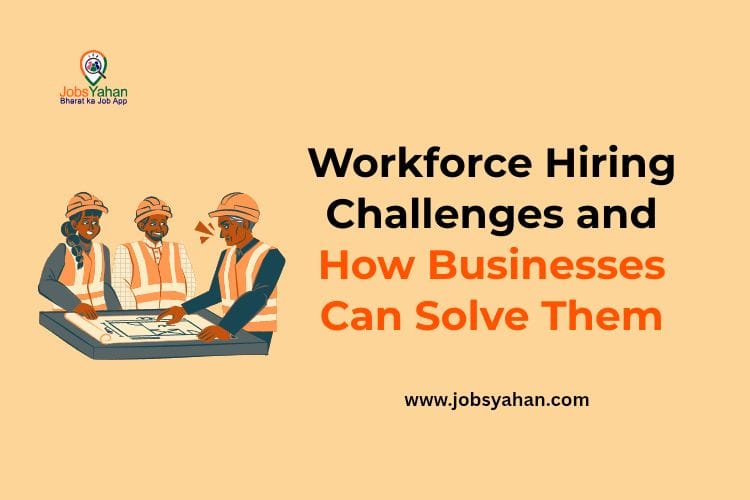
Hiring people has become one of the biggest challenges for businesses of all sizes. As companies grow, they need employees with a mix of skills, experience, adaptability, and attitude. Finding candidates who truly match what a business needs is not always easy. Even when a company receives applications, it may still struggle to find people who meet its real requirements. At the time, waiting too long in the hiring process can cause good candidates to accept offers from other companies. This makes workforce hiring solutions an essential part of modern business planning. JobsYahan Plus can help companies that want an easier way to handle their workforce needs.
One of the common issues in workforce hiring is finding candidates with the right skills. Many businesses look for people who can work with technologies, communicate clearly, solve problems quickly, and adjust to changing tasks. Those who have all these qualities might be rare in the talent pool. When companies depend on traditional recruitment methods, they might miss out on the strong candidates who could become valuable employees after the right training.
A broader recruitment strategy can help fix this problem. Of relying on just one job website or waiting for applicants to come forward, businesses can use several channels to find talent. Online job platforms, employee referrals, professional networks, recruitment agencies, social media, and existing candidate databases can all support talent acquisition. By reaching out through sources, companies improve their chances of finding people who have the exact skills needed for a role.
Another major challenge is the length of the hiring process. Creating job descriptions, reviewing applications, scheduling interviews, doing assessments, checking backgrounds, and preparing job offers can take time. When the process drags on, candidates may lose interest. Accept another position. To avoid this, businesses should look at each step. Remove anything that slows things down. Simplifying the recruitment workflow can save time. Keep the top talent engaged.
Technology can make hiring faster and more efficient. Applicant tracking systems and digital recruitment platforms help companies organize applications, send messages to candidates, schedule interviews, and follow up on positions. Automation reduces tasks like sending emails or sorting resumes so recruiters can focus more on evaluating candidates and communicating with them. A structured digital hiring process is especially helpful when the multiple roles need to be filled at once.
Attracting candidates in a job market is another issue businesses face. Skilled professionals often have many job opportunities available. While salary matters, it’s not the thing that influences decisions. Work environment, career growth, flexibility, learning chances, company culture, and job stability also play a role. Companies should clearly show what they offer and explain why a candidate would benefit from joining the team.
Clear communication during recruitment is equally important. Candidates should be given details about job duties, working hours, location, salary range if possible, interview steps , expected timelines. Late replies or unclear messages can lead to a candidate experience. Even if someone is not selected, professional communication helps leave an impression of the organization.
Hiring the person is only part of the challenge. Keeping employees is just as important. Businesses that lose workers frequently have to repeat the recruitment and onboarding process. This increases costs. Adds pressure to the HR teams. To reduce turnover, companies can provide onboarding programs, regular feedback, chances to learn, clear paths for career advancement, and a supportive workplace.
Workforce planning can also help companies prevent last-minute hiring emergencies. They should think ahead about goals and identify the types of employees they will likely need. For example, expanding into a market might require sales staff and customer support agents, while adopting new technology might create demand for technical specialists. Understanding needs allows businesses to start building a talent pipeline before positions become urgent.
Another smart approach is to consider workforce options. Not every job needs to be filled by a worker. Depending on the type of work, companies may choose employees, contract workers, part-time staff, freelancers, or project-based professionals. Flexible staffing lets businesses handle shifting workloads and access skills when needed without long-term commitments.
Businesses should also pay attention to the quality of their job descriptions. A vague posting can draw in applicants and make screening harder. A good job description should clearly state the responsibilities, required skills, experience level, working conditions, and expectations. When candidates understand the role, recruiters spend time filtering out people who don’t meet basic needs.
Interviews can be made efficient without lowering their quality. Companies can prepare the questions based on what the job actually requires and use the same evaluation method for every candidate. Phone or video interviews help overcome scheduling difficulties, especially when candidates and hiring managers are in different locations. Structured interviews also make it easier to compare the applicants using the criteria.
Training should not be ignored when hiring people who do not meet every requirement. Sometimes a candidate may lack the experience with a tool or process but show a strong attitude, basic knowledge, and a willingness to learn. Businesses should ask whether the missing skill can be taught. This opens up a pool of potential hires and allows companies to focus on potential as well as current abilities.
Workforce Hiring Solutions brings all these ideas into one organized recruitment strategy. By treating each job opening as a separate problem, companies can build a full process that includes workforce planning, sourcing talent, screening, interviewing, onboarding, and supporting employee development. The best solution depends on the company’s size, the industry's number of hires, and overall workforce needs.
Businesses should regularly check their hiring performance. Metrics such as time to hire, cost per hire, offer acceptance rate, employee retention, and candidate quality give insight into how well the recruitment process is working. If a particular channel consistently brings in applicants, the business can invest more there. If a step causes delays, it can be improved.
Ultimately, workforce hiring is not about filling open jobs. It’s about finding people who fit the company and can contribute over time. It’s also about creating a recruitment process that works well for both employers and candidates. By using workforce hiring solutions, broadening recruitment channels, embracing technology, improving communication planning for staffing, and investing in employee development, businesses can tackle many common hiring challenges.
A strong workforce gives businesses the ability to respond to changes in the market and seize opportunities. Companies that treat hiring as a strategy—rather than a last-minute task—can build better talent pipelines and lessen recruitment stress. With planning, flexible staffing, efficient processes, and a focus on people, businesses can create a workforce that supports both daily operations and long-term success. JobsYahan Plus can support businesses that need a workforce.