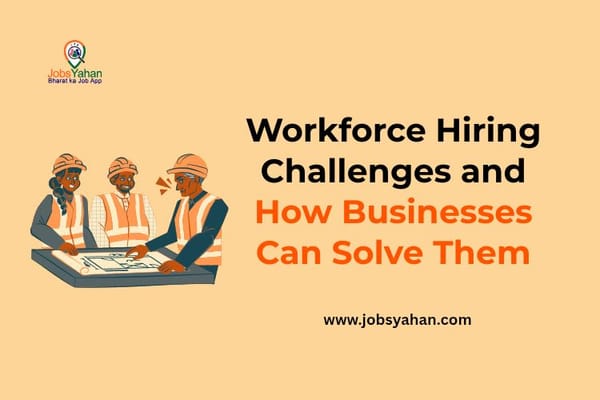
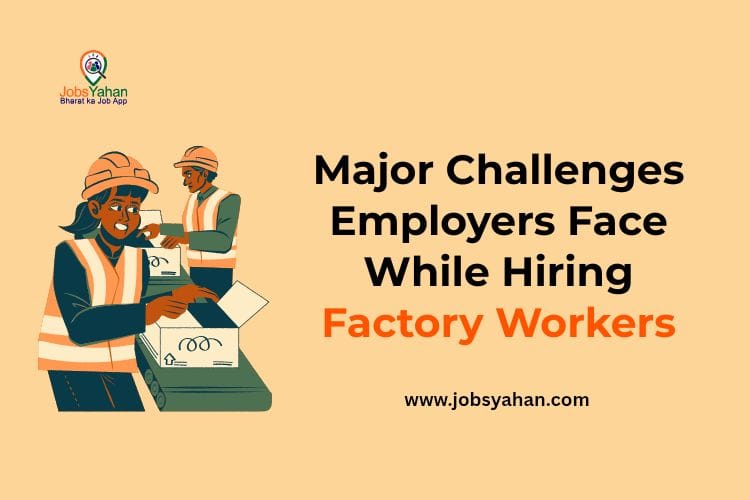
Hiring challenges in the HR domain are not just restricted to the manufacturing domain. When major hiring roles stay open, production schedules go haywire, equipment downtime often increases, and quality issues crop up, forcing existing employees to work beyond their capacity. For manufacturers who are in the hiring domain, this impact on the hiring gap has an adverse impact on their performance.
The manufacturing domain in India has suffered greatly over the last few years due to supply chain disruptions, geopolitical uncertainty, disruptions in the supply chain, and changing preferences of consumers. Businesses miss their production targets, shipments get delayed, supervisors are overworked, and there is slower maintenance response and reduced operational efficiency, which can all be traced to poorly filled or unfilled positions.
This is the major reason why companies in the manufacturing domain need not just applicants but also qualified candidates who can contribute in a highly demanding, technical, and often time-sensitive environment. Here are some of the major challenges that employers face while hiring factory workers and their solutions:
Failure To Reach Appropriately Matched Blue-Collar Workers
One of the major challenges that companies face while hiring blue-collar workers is limited reach. Companies receive minimal applications as job advertisements often fail to target the right audience. This results in hiring poorly skilled applicants or unfilled vacancies. Both circumstances can have a major impact on a business, causing liabilities and poor output.
Solution: Utilize Broad Advertising Methods
Companies may work to ensure that they have multiple job advertisement methods for broader reach. They have a wide range of available options, including the internet, television, and newspapers. JobsYahan offer customized blue-collar workers hiring solutions to businesses in the manufacturing domain.
Misalignment with The Company’s Work Culture
The blue-collar hiring process can only be successful if the values of a candidate and company align. If they don't, the candidate won’t stay in the company for a long time. Therefore, the organization will have to spend more time looking for a new blue-collar staff. Asking a few targeted questions during the interview will help the hiring team to get a clear idea about the thought process of the candidate.
Solution: Value Training Programs
While conducting the screening process or interview, asking a few questions will help the hiring manager understand the candidate’s character. Also, observing the candidate’s body language and having a general conversation will help the hiring manager to get an idea of his or her personal character.
Each candidate having the appropriate skills might not suit the organization’s dynamic, which might be a challenge. To enable these candidates to assimilate, organizations can hold training sessions for their staff to adapt to their working environment. As a hiring manager, it is essential that you communicate the expectations of your organization to the blue-collar workers.
Poor Assessment of Knowledge and Skill Sets
The responsibility of finding blue-collar workers who possess the required skills is a major challenge for the HR team. Assessing candidates becomes tough when there is a lack of proper assessment experience and resources. Careful examination and assessment will help you to evaluate the skills of prospective blue-collar workers you want to hire. Effective skill evaluation is a major step for hiring blue-collar workers who meet the requirements of a company.
Solution: Set Up Proper Protocol for Skill Assessment
Organizations that are involved in the manufacturing domain must implement a strict, multi-step assessment protocol for correctly assessing and verifying the skills of blue-collar workers. Apart from evaluating skills, checking the temperament and character of the candidate is also essential. This will help candidates whose values are in sync with the company. This will help to ensure that they fit within the company well and make valuable contributions.
Presence of an Ageing Workforce and Limited New Entrants
The demographic shift within the manufacturing industry is also a major cause of concern. A substantial number of skilled blue-collar workers are nearing retirement, and there aren’t enough young professionals entering the manufacturing domain to replace them. This generational imbalance is acute in sectors such as heavy equipment manufacturing, precision engineering, and automotive parts.
The problem is worsened by long-existing misconceptions related to manufacturing jobs. Despite being increasingly high-tech and paying good salaries, many still view these jobs as physically demanding or low-prestige as compared to careers in the service domain and technology.
Solution: Brand Repositioning
Hiring managers of manufacturing companies not only need to identify talent but also reposition their company’s image to attract young professionals. JobsYahan can help them in this regard with customized blue-collar hiring solutions.
Companies Prefer ‘Job-Ready’ Talent
One of the major reasons behind the shortage of talent is the mismatch between education and employability. Many candidates possess ITI, diploma, or vocational certifications. But recruiters often find that they lack practical exposure, expertise in handling machines, troubleshooting capabilities, or familiarity with modern manufacturing systems.
As technology-backed manufacturing is on the rise through automation, robotics, CNC, IoT, and even AI-enabled operations, the skill sets of blue-collar workers have changed. Organizations are now looking for technicians who can work with perfection in a digital manufacturing environment instead of performing repetitive manual tasks.
Solution: Bridging The Gap Between Training and Industry Needs
The gap between education and employability in the manufacturing domain can be bridged through competency-based recruitment, skill development, and industrial apprenticeships through training in the use of existing technologies.
Collaboration with vocational schools and skill development organizations will enable candidates to get acquainted with robotics, CNC machines, IoT, and other new manufacturing technologies. With upskilling and training in the workplace, they can improve their technical and troubleshooting skills to be prepared to work in a technologically driven manufacturing environment.
Conclusion
The future of manufacturing lies in the ability of companies to build a flexible workforce. There is a need for a better way to help firms counter the persisting issue of talent shortage. As a job portal, JobsYahan helps firms to identify job-ready individuals. It’s through a good talent strategy that a firm can boost its productivity.