

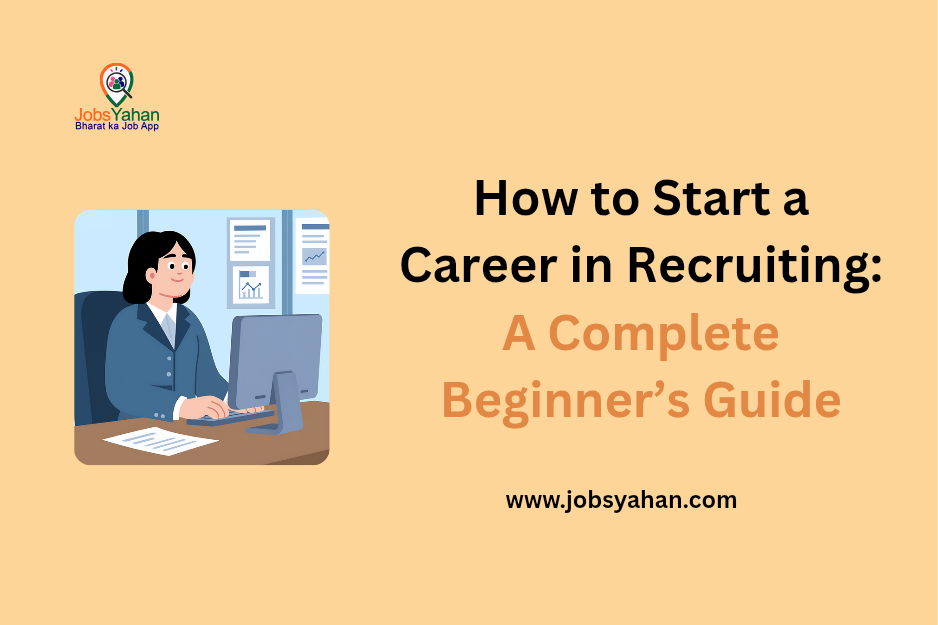
The decision to become a recruit is part of a desire to play a central role in the development of companies. This profession offers a unique combination of challenges and rewards, combining qualifications and technical experience.
The strategic importance of recruitment in a company.
Recruitment is a fundamental pillar of a company's growth. As a recruiter, you identify and attract the talented who will shape the future of the organisation. You are at the heart of strategic HR decisions, working with managers to understand their needs. Your role in long-term talent management is crucial, helping to build high-performance teams and maintain the company's competitiveness in a constantly changing labour market.
The human and technical qualities required
To become a recruit, certain qualities are particularly valued.
Listening Skills and Empathy: The ability to understand candidates' needs and motivations is essential.
Communication skills: You must be able to communicate effectively with a variety of people, from candidates to managers.
On a technical level, becoming a recruiter means mastering several key skills.
Interview techniques: Knowing how to prepare for a recruitment interview is fundamental.
Digital sourcing tools: Experiences in online recruitment platforms and professional social networks are essential.
Knowledge of the job market: A thorough understanding of marketing trends and needs is crucial.
Being a recruiter also requires a high degree of adaptability. Technologies and recruitment methods are evolving rapidly, and this need for continuous learning makes the job particularly stimulating for those who enjoy challenges and innovations.
Understanding the role and tasks of a recruit.
Becoming a recruiter means taking on a multifaceted role that encompasses several key tasks in the recruitment process. Here's a detailed overview of the main responsibilities that await you in this career.
Writing and distributing advertisements
One of the first tasks in becoming a recruiter is to know how to write job advertisements attractively and relevantly. This task required a thorough
Understanding of their positions to be filmed and their company's culture. You'll be able to analyze the needs of the position in collaboration with the managers, write clear and attractive job descriptions, and choose the most appropriate distribution channels to reach the target candidates. Writing effective adverts is an art that is refined with experience. As a recruiter, you'll learn to balance the essential information about the job with elements that highlight the company and attract its talented people. top talents. You will also need to ensure that your advertisements comply with current regulations and reflect the company's values of diversity and inclusion.
Sourcing and pre-qualifying candidates
Recruitment sourcing is a key skill for becoming a recruiter. It involves proactively identifying potential candidates, often even before they apply. This stage involved using professional platforms such as LinkedIn, attending job fairs and networking events, and managing a talent database. Modern sourcing also involves a strong digital component. Recruiters need to master the advanced search techniques on social networks, understand the algorithms of recruitment platforms, and sometimes even use artificial intelligence tools to identify the best profiles.
Conducting interviews and skills assessments.
Mastering differential interview techniques (structured, situational, etc.)
Interpreting candidates' nonverbal languages
Assessment qualifications can also involve the use of personality tests for recruitment purposes. or professional scenarios. Assessee first, for example, offers scientific tools such as SWIPE, DRIVE, and BRAIN to assess candidates ' personality, motivation, and reasoning, respectively.
Monitoring the integration process.
The recruiter's role does not end with selecting the candidate.
This involves Coordination without HR teams to prepare for the arrival of the new employee. Regular monitoring during the trial period
Gathering feedback from the manager and the new employee.
By getting involved in the integration process, you are helping to improve the candidates' experiences and reduce turnover, two essential aspects of becoming an effective and recognized recruiter. Successful integration increases the chances of retaining talent and accelerates the productivity of new employees. Post-recruitment monitoring also enables you to refine your selection criteria for future recruitment. By observing the success of the candidates you've recruited, you can identify the most relevant indicators for predicting performance in a given role.
What training do you need to become a recruit?
To become a recruit, therefore, there are several possible training courses. The choices will depend on your background, your career objective, and the opportunities available.
Master the Foundational Skills
While many recruiters come from diverse backgrounds like sales, customer service, or marketing, certainly, core competencies are universal in the industry.
Communication & Emotional Intelligence: You spend most of your day talking, emailing, and interviewing. The ability to build rapport quickly and practice active listening is paramount.
A high level of determination is required to bounce back and keep the pipeline moving.
Tech-Savviness: Modernist recruiter jobs require proficiency in digital tools. You’ll need to master it.
Applicant Tracking Systems (ATS): Software used to track, sort, and manage candidate data.
Sourcing Platforms: Proficiency in LinkedIn recruiting, niche job boards, and even Boolean search techniques is essential.
Choose Your Recreation Path
Before searching for recruiter jobs near me, it is helpful to understand the different types of environments in which you can work.
Agency/Starting Retreating: You work for a firm that provides hiring services to multiple clients. This is typically high-volume, commission-based, and offers exposure to various industries.
Diplomas and a traditional academic background.
The traditional route to becoming a recruiter often involves training in human resources or management. The most common qualifications include.
Degree in Human Resources, Master's in Human Resources Management, business school specialising in HR These courses provide a solid grounding in employment law. These courses will enable you to acquire the knowledge and skills in organisational psychology and talent management that are essential for becoming a recruiter. They will also enable you to develop a global understanding of how companies operate. These training programs generally include courses on recruitment techniques, skills management, etc. Some courses also include modules on new HR technologies, such as the use of artificial intelligence in recruitment. Some courses also offer modules on new HR technologies, such as the use of artificial intelligence in recruitment.