

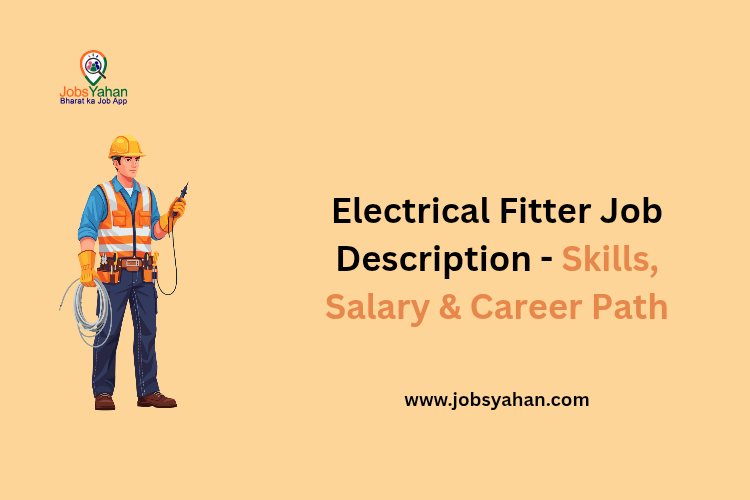
Electrical fitter jobs are required as part of the electrical industry segment. What is an electrical fitter? An electrical fitter is a skilled technical person responsible for the mounting, assembling, maintaining, and repairing of electrical apparatuses and installations. They work towards the efficient and safe operation of electrical machinery in factories, construction areas, power stations, and commercial and business centers. Due to the increasing growth of industries and development of infrastructures, jobs for electrical fitters near me are in high demand in the Indian market.
An electrical fitter would mostly work with electrical wiring systems, motors, transformers, switchgear, control panels, and power distribution equipment. This would need the technical knowledge of electrical principles and working with tools and machines. Electrical fitters have an important role in avoiding electrical failures and making operations continuous.
Electrical Fitter Job Description
The occupation of an electric fitter also entails some work related to installation, and then there is some repair, testing, and troubleshooting. Electric fitters install the electrical components based on specifications mentioned or described through drawings or technical specifications. Installing electric wires and circuits, and assembling electric panels, also comes under the work of electric fitters.
Maintenance plays a critical role in electrical fitter jobs. Fitters perform checks on electrical systems to identify any faults, damaged parts, or hazardous connections. In the event of a problem, the fitter will identify the cause of the problem and make any necessary repairs to damaged parts. Conducting tests on the electrical setup using the necessary tools will guarantee the correctness of the insulation resistance, current flow, and voltage.
Electrical fitter technicians also aid engineers and supervisors in the process of new installation or system upgrades. They also preserve records of any maintenance and follow health and safety guidelines in a bid to avert accidents. Their contribution in the workplace is critical in creating efficiency and reliability in the area of electricity.
Required Knowledge for Electrical Fitter Jobs
Electrical fitter job roles require skills and hands-on knowledge simultaneously. The skills required in electrical circuits, wiring systems, and electrical equipment are highly important. The ability to read electrical diagrams, blueprints, and drawings is required for an electrical fitter.
Almost all jobs related to an electrical fitter require the applicant to hold a technical skill set in the field of electricity. Qualifications such as an ITI Certificate in Electrical Fitter or Electrician are the most preferred ones. In some senior jobs, a diploma in electrical engineering is needed.
Practical training through apprenticeships or on-the-job training is always preferred. Certifications from recognized bodies will help the candidate obtain electrical fitter jobs near me more easily.
Conventional Drawing Salary Structure
Compared to small workshops, electrical fitter professionals working in large units or infrastructure projects earn better salaries.
The other sources of extra income may be overtime wages, night shift allowances, and other performance rewards. Public service jobs of an electrical fitter may involve secure and stable financial rewards.
Life Path and Development
Electrical fitter jobs provide a strong and constant employable skill trajectory. New electrical fitters are likely to commence as trainees or junior fitters and develop into senior fitters with time. After gaining experience, additional training, and skills, electric fitters can move to the position of supervisors, maintenance engineers, or electrical inspectors.
Some of the professionals pursue diploma or degree programs in order to progress into engineering positions. Other employees opt for self-employment opportunities through the founding of electrical contracting and maintenance companies. The future growth for electrical fitter jobs is high due to the high demand for qualified electrical personnel.
Work Environment
Safety equipment must also be utilized, given that electrical currents can still pose danger.
Despite the physical requirements of the work, electrical fitter employment opportunities are relatively stable.
Demand and Job Market
The requirement for electrical fitter jobs is on an upward trajectory due to various sectors becoming more prominent. The growth in industries has led to an increase in job requirements for electrical maintenance professionals. Hence, finding electrical fitter jobs near me is not an issue. Conclusion: Electrical fitter jobs are technical jobs that require skill, and they provide stable jobs, learning by doing, and the prospect of career advancement. With the right training, electrical fitters can carve careers out of this field. For this reason, with the increasing demand for electrical infrastructure, the prospect of jobs related to electrical fitters will still be viable in the future.